About
My work centers on causally reliable decision-making for wireless networked intelligence. I study how distributed agents learn, communicate, and act under interference, resource constraints, and imperfect feedback.
My research brings together causal decision learning and online optimization, communication-aware cooperative intelligence, and heterogeneous wireless networks, with applications including UAV–USV collaboration and maritime edge systems.
My academic background includes Master's-level study in Smart Ocean Technology at the University of Macau (2024–2026). My earlier training is in Communication Engineering. Explore my research agenda →
From causal decisions to networked intelligence
Select a node to explore its methods, research themes, and related papers.
ICLR 2027 · 4 manuscripts under review (broad research labels)
CAUSAL + LLM
COOPERATIVE INTELLIGENCE
NETWORKED SYSTEMS
Selected Publications
View All →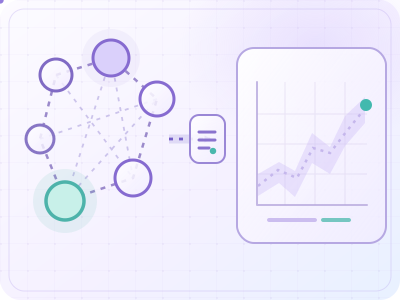
Online Causal Configuration for Networked Systems via Doubly Robust Steady-State Learning
NeurIPS 2026 · Accepted
Connects interference-aware exposure modeling, doubly robust evaluation, and online selection for black-box steady-state network configuration.

Dependency-Aware HARQ and Link Adaptation for Wireless Transmission of Open-Vocabulary Scene Graphs
arXiv:2608.08110 · Public preprint; IEEE TWC decision pending
Models semantic packet prerequisites and jointly adapts HARQ reliability, modulation, and transmit power under latency and energy budgets.
Low-Altitude Task Offloading for UAV–USV Collaboration in Marine Edge-Enabled Networks
AIoTC 2025 · Best Paper Award
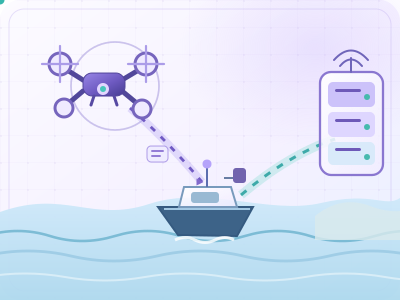
Formulates communication-aware UAV–USV task offloading as a Stackelberg game to coordinate computation and resource allocation in maritime edge networks.

PSO-Based Optimal Coverage Path Planning for Surface Defect Inspection of 3C Components With a Robotic Line Scanner
IEEE TIM 2025
Develops particle-swarm-based coverage planning for robotic line-scanner inspection of complex 3C component surfaces.
News
Launched YAO LAB · 爻间, an interactive I Ching laboratory connecting 64 hexagrams through six-bit geometry, probability experiments, classical texts, and optional AI-assisted reflection.
My work on online causal configuration for networked systems was accepted at NeurIPS 2026.
A preprint on dependency-aware HARQ for open-vocabulary scene graphs became publicly available on arXiv.
My maritime UAV–USV task-offloading paper received the AIoTC 2025 Best Paper Award.
My collaborative robotic inspection work appeared in IEEE Transactions on Instrumentation and Measurement.